
Why Do Windows Get Condensation in Winter? What Connecticut Homeowners Should Know

As temperatures begin to drop across Connecticut, many homeowners notice something unusual happening to their windows: moisture collecting on the glass, foggy patches that won't disappear, or condensation forming between window panes.
While some window condensation is perfectly normal during colder months, other types may indicate a problem with your window glass or insulated glass seals.
Understanding the difference can help you determine whether your windows simply need better ventilation or whether it's time to consider professional glass replacement.
What Causes Condensation on Windows?
Condensation forms when warm, humid air comes into contact with a surface that's cold enough to cause water vapor to turn into liquid droplets.
During the fall and winter, indoor air is often warmer than the outdoor temperature. When moisture in your home's air reaches a cold window surface, droplets can form.
You may notice this most often in the morning, particularly in bedrooms, kitchens, and bathrooms where humidity levels tend to be higher.
However, not all condensation is the same. Where the moisture appears can tell you a lot about what's happening with your windows.
1. Condensation on the Inside of Your Windows
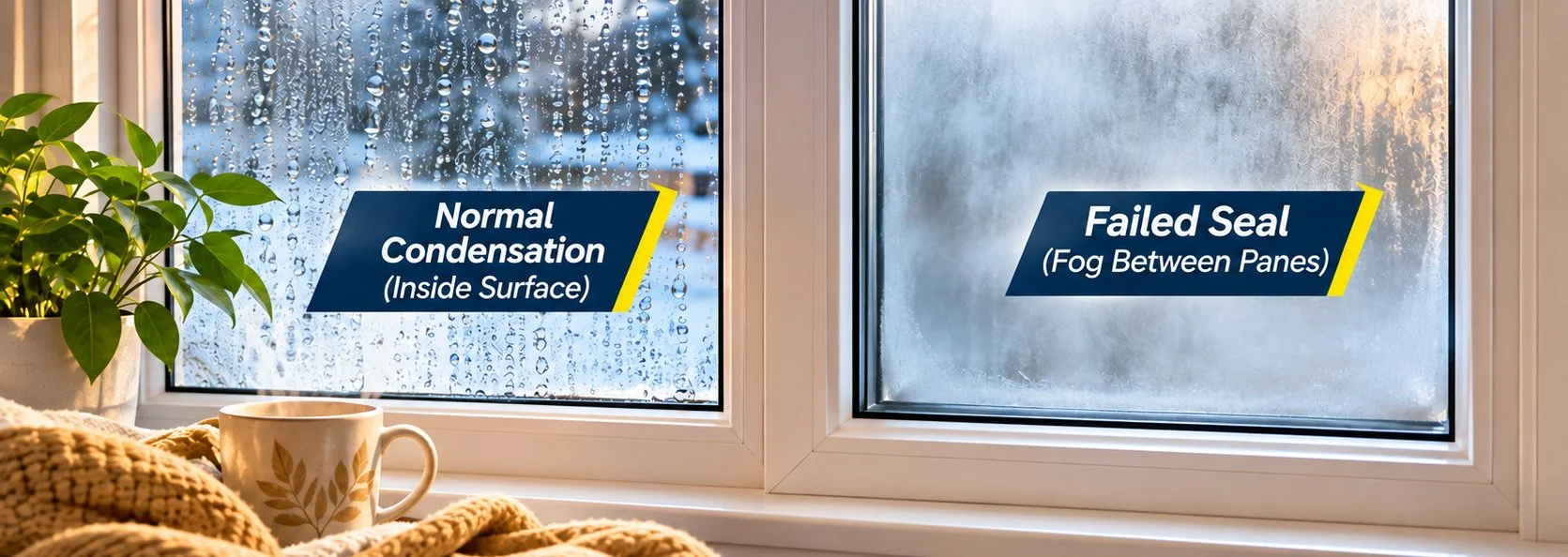
If you can wipe the moisture away from the room side of your window, you're likely dealing with indoor condensation.
Common causes include:
High indoor humidity
Cooking, showering, and other activities that release moisture
Limited ventilation
Cold glass surfaces during freezing weather
Curtains or blinds restricting airflow around windows
What can you do?
Improving ventilation, using bathroom and kitchen exhaust fans, and monitoring indoor humidity can help reduce condensation.
If moisture frequently collects on windows, wiping it away promptly can also help prevent damage to nearby woodwork and window finishes.
Persistent condensation may warrant a closer look at your home's humidity levels and window performance.
2. Condensation Between Double-Pane Windows
Condensation trapped between the panes of insulated glass is a different situation.
Modern double-pane windows are designed with a sealed space between the glass panels. This construction helps reduce heat transfer and improves insulation compared with traditional single-pane glass.
Over time, the seal around an insulated glass unit can deteriorate or fail.
When that happens, moisture may enter the space between the panes, creating a foggy or cloudy appearance that cannot be cleaned from either side.
Signs of a failed window seal include:
Persistent fogging between glass panes
Moisture that cannot be wiped away
Cloudy patches that change with the weather
Mineral staining or residue inside the insulated glass unit
Unlike ordinary surface condensation, moisture between the panes generally indicates that the sealed glass unit needs professional attention.
3. Does Foggy Glass Mean You Need New Windows?
Not necessarily.
One of the most common misconceptions about foggy double-pane windows is that the entire window must be replaced.
In many cases, if the existing window frame and surrounding components are in good condition, replacing the insulated glass unit may be an option.
This approach allows homeowners to address failed glass seals without automatically replacing the entire window assembly.
A professional glass company can evaluate the window and determine whether glass-only replacement is appropriate.
4. Can Window Condensation Affect Your Home?
Occasional surface condensation may not be a major concern, but persistent moisture shouldn't be ignored.
Excessive condensation can contribute to:
Water damage around window sills and frames
Peeling paint or deteriorating finishes
Mold or mildew growth in persistently damp areas
Reduced visibility through the glass
Ongoing frustration with foggy windows
If condensation appears between insulated glass panes, it may also indicate that the glass unit is no longer performing as originally designed.
Addressing the underlying cause can help protect your windows and maintain a more comfortable indoor environment.
5. How to Reduce Window Condensation During Connecticut Winters
There are several simple steps homeowners can take to manage moisture around windows during the colder months.
Monitor indoor humidity. Use a hygrometer to keep track of moisture levels and adjust humidity as outdoor temperatures change.
Improve ventilation. Run exhaust fans when cooking or showering and make sure they vent properly outdoors.
Allow air to circulate. Opening curtains or blinds periodically can help warmer room air reach window surfaces.
Check for damaged seals. If moisture is trapped between panes, schedule a professional inspection.
Consider insulated glass replacement. Replacing a failed insulated glass unit can restore a clear view and the intended sealed construction.
When Should You Call a Glass Professional?
If you're noticing persistent fogging between window panes, visible glass damage, or moisture that cannot be removed through normal cleaning, it may be time for a professional evaluation.
The key is identifying whether the issue comes from indoor humidity, the window frame, or a failed insulated glass unit.
At Southington Glass Company, we help homeowners address residential glass problems, including damaged and foggy window glass.
Whether you're dealing with a failed double-pane window seal or need replacement glass, our team can help you explore practical options for your home.
Keep Your Windows Clear This Winter
November is a good time to address window problems before Connecticut's coldest weather arrives.
Understanding why condensation forms can help you avoid unnecessary repairs while recognizing when professional glass replacement may be needed.
Are your windows foggy between the panes? Contact Southington Glass Company today to learn more about residential window glass replacement and available solutions